
April 16, 2025
Risks of Injury and Occupational Illness in Office Activities
When we think about office work, we assume that nothing can happen and that there are no risks of injury or occupational illness.
However, these risks arise due to inattention, negligence, or omissions in our daily activities.
Let’s go step by step, break it down a bit, and see what we are exposed to when we do not follow simple and easy-to-apply health and safety rules.
One of the main injury risks is tripping, which can occur in various ways:
When multiple office electronic devices (computers, monitors, printers, fax machines, etc.) need to be connected to the power network , requiring power cables and/or extension cords. If these cables are not properly positioned, they can create tripping hazards for employees or visitors.
In some buildings, floors have built-in power outlets that must be closed after connecting power cables. If left open, they pose a tripping hazard.
Leaving a drawer open, especially at floor level, can be hard to notice and increase the risk of tripping.
Objects left in walkways, such as boxes of printer paper, laptop bags, personal items, packages, or deliveries, can create tripping hazards.
Another common risk is the slip hazard, which occurs especially when maintenance personnel clean access areas without placing warning signs about the slippery surface. This risk is also present in dining areas when liquids such as water, tea, or coffee, as well as food scraps, are left on the floor. Additionally, slip hazards arise during rainy or snowy weather when employees enter the building with wet footwear, particularly on smooth surfaces like tiles or similar flooring.
In office environments, there is also a risk of electrical accidents, which can occur in two situations:
When using damaged power cables with deteriorated plastic insulation or broken plugs, exposing employees to potential electric shocks.
When an employee, without proper qualifications, attempts to intervene at the electrical panel during a power outage, which can happen for various reasons.
A less common but serious risk is injury during emergency situations, such as fires or natural disasters (earthquakes, floods, or landslides). In such cases, it is crucial to be familiar with emergency response and evacuation procedures.
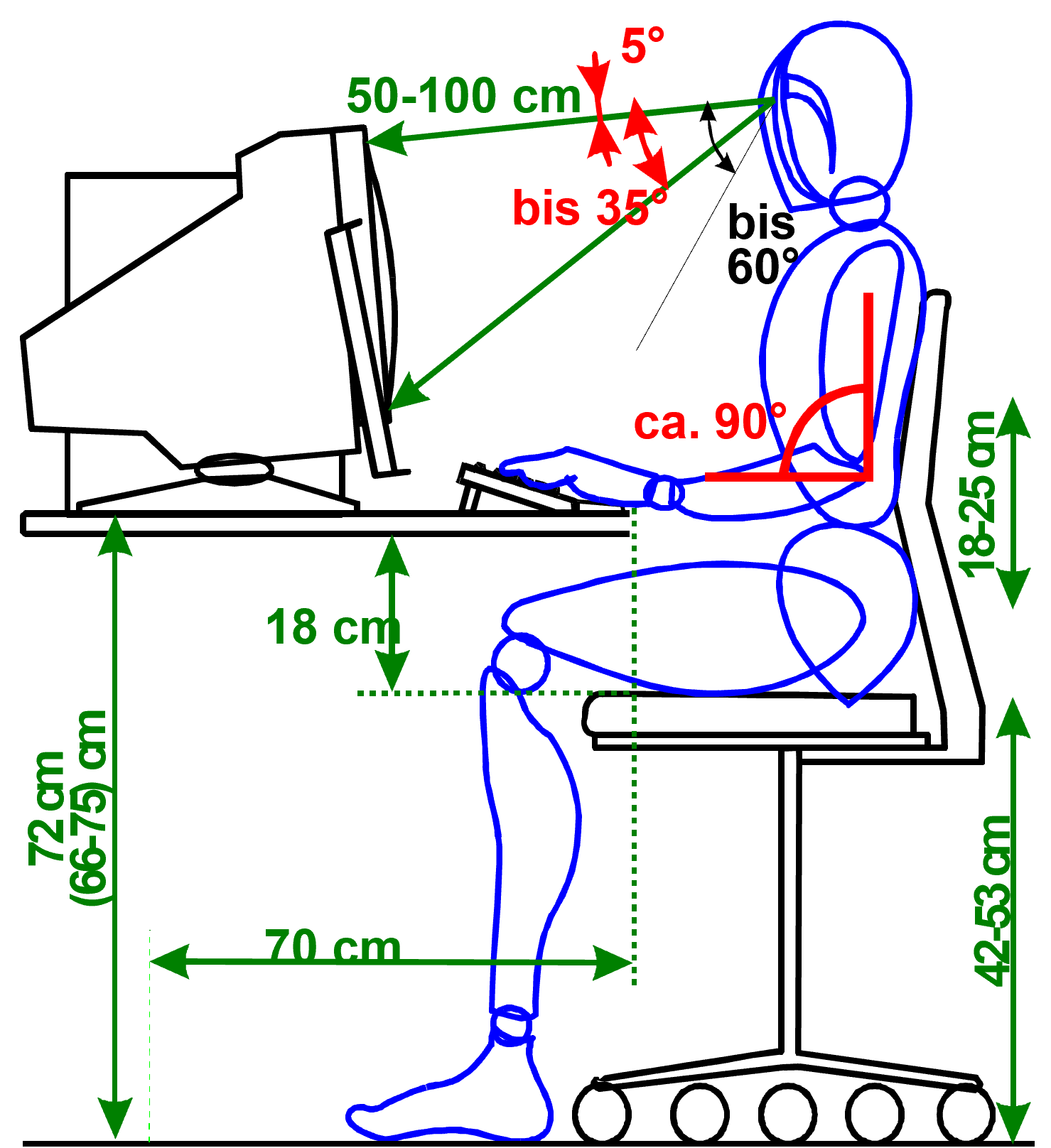
Beyond injury risks, office workers may also face occupational illnesses, mainly due to ergonomic issues at the workplace. Poor posture, lack of regular breaks, and incorrect monitor positioning can lead to musculoskeletal disorders and vision problems.
A correct sitting posture at the desk can be illustrated by the image below:
All the aforementioned risks — both accidents and occupational illnesses — can be prevented through employee participation in specialized training sessions and the consistent application of safety procedures in daily activities.